OTC Fulfillment for Health Systems: From Recommendation to Doorstep
MandataMD Team · 7 min read · Nov 2, 2026
MandataMD Team · 7 min read · Nov 2, 2026
Prescriptions move digitally from the EHR to the pharmacy. Labs route digitally too. But when a clinician recommends an over-the-counter product, whether a bowel prep kit, an OTC continuous glucose monitor, or a knee brace, the handoff is usually a printed instruction or a verbal suggestion. OTC fulfillment is the set of steps that turns that recommendation into a product in the patient's hands.
In retail, fulfillment means picking, packing and shipping. In a health system it starts earlier: an OTC order placed in the EHR, a patient-facing checkout, shipping timed to clinical events (like a procedure date), and status the care team can see.
Even with e-prescribing, 22.5% of prescriptions in one large study were never filled, rising to 28.3% for new medications.1 Those are prescription data, but they make a useful analogy: if a tracked, electronic order goes unfilled that often, an untracked OTC suggestion has little chance of doing better.
The stakes are concrete in GI. Up to 20–25% of colonoscopies are reported to have inadequate bowel preparation.2 Imperfect prep was associated with 12% higher colonoscopy costs at a university hospital and 22% at a public hospital, driven by aborted exams and early repeats.3
Staff absorb the gap. 75% of medical groups say clinicians use EHR or practice-management workarounds, with order entry among the most cited areas.4
The clinician places the OTC order in the EHR during the visit, so the patient gets exactly the product recommended.
A single secure text with a prefilled cart. No app download or account creation.
A prep kit is only useful if it arrives before the procedure. Fulfillment should be scheduled against the clinical date.
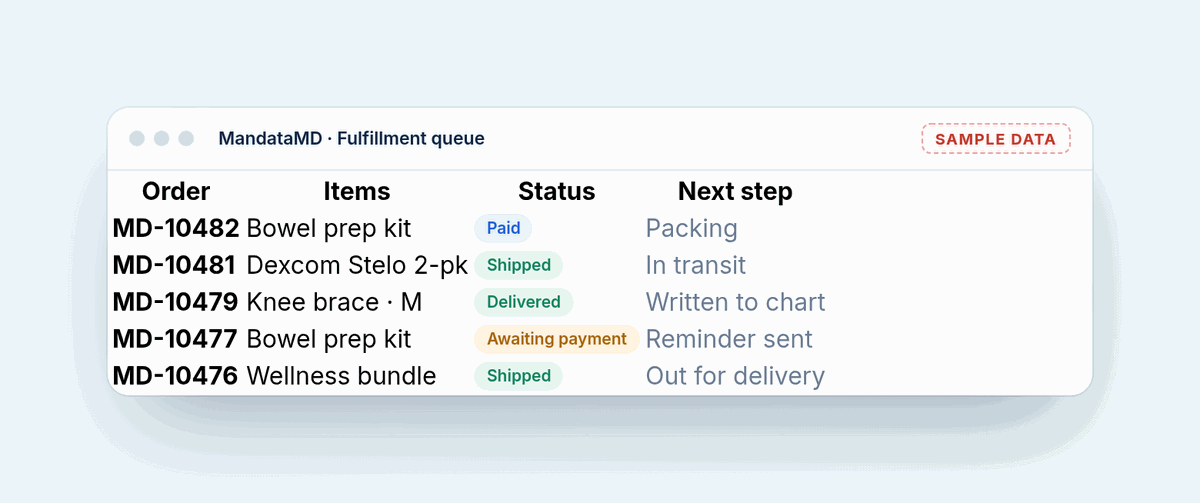
Patients see shipping status by text; teams see a live queue of paid, shipped and delivered orders.
MandataMD is native in athenaOne (listed on the athenahealth Marketplace); other EHRs available on request. Book a demo.
A 20-minute demo of the full flow, from EHR order to doorstep.
Book a demo